Surface type
Concrete, pavers, walkways, composite, wood or mixed surfaces do not share one safe setting.

Pressure is a tool, not the whole method. Ideal Pro starts with the surface, condition and surrounding property, then uses the level of pressure, chemistry and technique that fits the job.

The same machine can produce very different outcomes on concrete, pavers, composite decking and weathered wood. The method should follow the material, not the other way around.
Those are the details that matter enough to affect a starting estimate or the method.
Concrete, pavers, walkways, composite, wood or mixed surfaces do not share one safe setting.
The estimator uses an area band rather than asking homeowners for perfect measurements.
Normal dirt, heavier organic buildup and severe grime are different scopes.
Walls, landscaping, drains, painted areas and fragile nearby surfaces can change setup and runoff control.
Oil, rust, deep staining and permanent discoloration are not promised away by routine pressure washing.
If wastewater containment, recovery or special disposal is required, the job is reviewed before commitment.
Choose the main surface, an approximate area band and the buildup level. If the property is mixed or you are unsure, review is safer than fake precision.

The result comes from matching chemistry, pressure, distance and passes to the surface, condition and surrounding property.
Surface-cleaning views from the project gallery. We confirm the material and condition before quoting your outdoor surfaces.
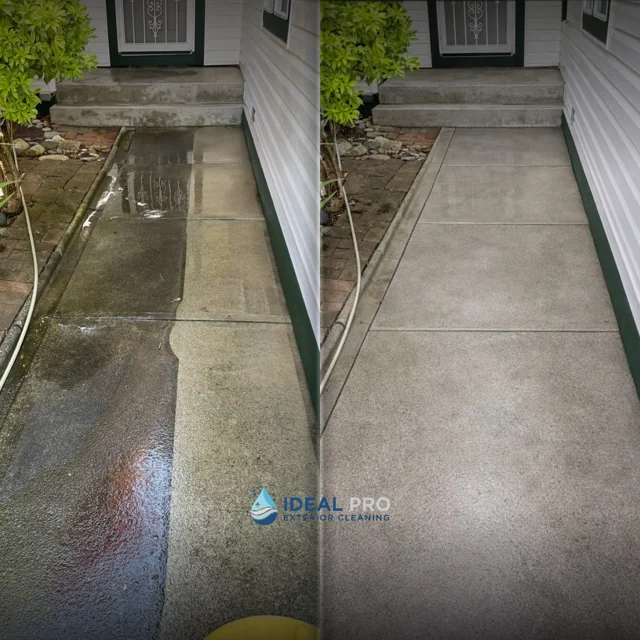
Two views of the same walkway, supplied together: cleaning in progress on the left and the finished surface on the right.
See this collection →Surface age, damage, coatings, joints and surrounding property shape the plan.
Set up the work area and account for drainage, plants, walls, fixtures and sensitive surfaces.
Pressure, chemistry, distance and passes are matched to the material and condition.
Edges and surrounding areas are checked and the result is reviewed against the agreed scope.
Choose your main surface, area band and buildup level. Mixed surfaces, unusual runoff requirements or uncertain material can move to review rather than producing a false number.
Yes if the method is too aggressive or poorly matched to the material. That is why surface condition is part of the job assessment.
Not necessarily. Specialty staining can require separate treatment and some permanent discoloration may remain.
Suitable pavers can be cleaned, but joint sand, sealing status, edges and condition should be considered first.
Wood is not treated like concrete. Weathered, painted, damaged or fragile wood needs a more conservative plan and may require review.
Containment, recovery, filtration or special disposal requirements are reviewed before the work becomes a commitment.